• Skip to primary navigation
  • Skip to main content
  • Skip to footer
AddUp

AddUp

  • Machines
    • Machines
      • PBF
        • FormUp 350
        • FormUp 350 Evolution
        • FormUp 750 – Coming Soon
      • DED
        • Modulo 400
        • Magic 800
      • Software
        • AddUp Dashboards
      • Why AddUp
        • Customer Journey
        • Certifications
  • Service
    • Service
      • Consulting
      • Training
      • AddUp Academy
  • Industries
    • Industries
      • Medical
      • Tooling & Molding
      • Aerospace & Defense
      • Other
  • Applications
  • Resources
    • Resources
      • Guide to Metal 3D Printing
      • Blog
      • Videos
      • Events
      • Materials
      • Downloads
      • AddUp Academy
      • Customer Portal
  • Company
    • Company
      • News & Press
      • Partners
      • Careers
      • Company Locations
      • Supplier Portal
  • Contact
        • Search

  • EN
    • FR
    • DE

PBF

August 11, 2023 by

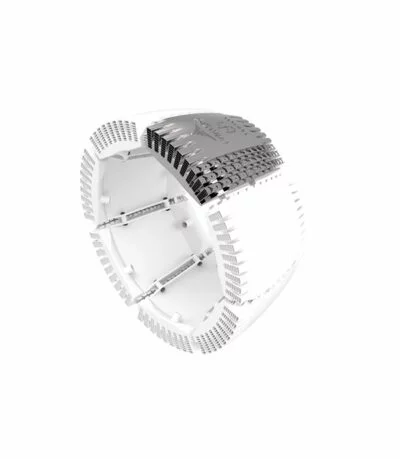
This innovative design is tailored for curved surfaces and has demonstrated exceptional thermal performance. The entire heat exchanger was produced in a single manufacturing process, showcasing the efficiency and capability of AddUp’s approach.

For thermal equipment, additive manufacturing has a huge advantage. It allows the development of complex channel shapes, improving thermal performance and reducing volume. It also allows the manufacturing of shapes that are impossible to produce traditionally for this type of equipment (e.g. double-curved channels).

INDUSTRY

Aeronautics

CHALLENGE

3D print a heat exchanger with innovative design

KEY BENEFITS
  • Modular heat exchanger concept
  • A double-curved heat exchanger
  • Part printed in one go with thin walls
  • When damaged, replacement of the unit instead of the whole arrangement
icon addup
Custom Shape
icon addup
Assembly
icon addup
Thin Walls
icon addup
Performance

History

A heat exchanger is a system used to transfer heat between a source and a working fluid. Heat exchangers are used in both cooling and heating processes. Depending on the application, the fluids may be separated to prevent mixing or they could also be in direct contact. In the aeronautics industry, aircraft heat exchangers are used to take heat from the engine’s oil system to heat cold fuel. This improves fuel efficiency and also reduces the possibility of water becoming entrapped in the fuel, which could cause freezing.

Heat Exchanger With Additive Manufacturing or HEWAM is a project aiming to develop a heat exchanger using all the potential of additive manufacturing in a geometry that fits with a wide range of surfaces and volumes used in the aerospace industry. This project was developed by PrintSky and Temisth. PrintSky is a joint-venture between the AddUp group, an expert in metal additive manufacturing, and SOGECLAIR, one of the international leaders in the integration of high-value-added solutions in the fields of aeronautics, space, civil and military transport. Temisth is a company specializing in the development of customized thermal solutions using additive manufacturing.

PrintSky was in charge of the design aspect of the project, developing its own methodology to determine the characteristics of the metal part, in terms of mechanical, thermal, and manufacturability.

The production was then passed to the AddUp experts who 3D printed this aeronautical part on their FormUp® 350 machine. The goal was to produce a compact heat exchanger according to the PBF (Laser Powder Bed Fusion) process with an innovative shape and above all as efficient as “traditionally“ manufactured heat exchangers. And then, after the production, HEWAM was tested on a customized test loop developed by Temisth.

Challenges

The objective for HEWAM was to cool a liquid as oil entering the heat exchanger at 110°C with ambient air at -50°C. The mass flow rate of the oil is fixed. Air mass flow rate is given by the dynamic pressure of the air flow arriving in the area of the heat exchanger and the pressure drop characteristics of the device. The objective was to remove 2200W of the oil circulation (32g/s ~2,4 L/min) on one modulus of the heat exchanger by ensuring enough air flow through it. The main physical issue on this heat exchanger was to ensure enough airflow inside the heat exchanger with high heat transfer coefficient.

SOLUTIONS

The groups developed a specific methodology in order to ensure the thermal requirements with mechanical constraints and additive manufacturing feasibility for HEWAM. A specific design was created taking into account the variation of air temperature (from -50°C up to +25°C) and thus its density. The channel width was increased to limit air acceleration and pressure drop. In order to maintain thermal performances, the fins have an adaptative geometry along the air flow in order to consider air velocity and channel size changes. The physical design of the part was created to fit a wide range of surfaces and volume used in the aerospace industry. It was designed to include a double shape curve which allows this part to fit the curvature of aircraft engines.

HEWAM was printed twice, using two different materials. First, Inconel 718. This material is heavier than aluminum by more than 3 times and is less conductive, however for additive manufacturing, it presents more interesting characteristics. With Inconel, thin walls (<0.5mm) and fins (0.15mm) are possible without leakage. Designing the heat exchanger with these thin features allows for similar performance and weigh characteristics which are possible with aluminum.

A final advantage of this 3D printed part is the possibility of updating the exchanger with no need to develop a new tooling.

Results

The final result is a double-curved heat exchanger, suitable for curved surfaces with very successful thermal performance and printed in one go. A modular solution: exchangers can be arranged next to each other in order to deliver high exchange power. The curved shape is suitable for installation in aircrafts engine pylons. The testing validated the leakage (or tightness) of the part as well as its performance, both of which were very successful especially when compared with more conventional means of manufacturing.
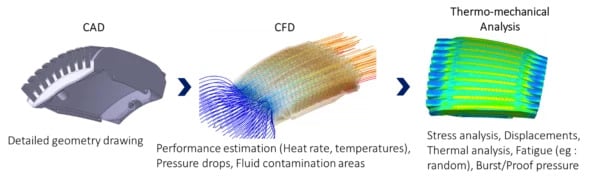
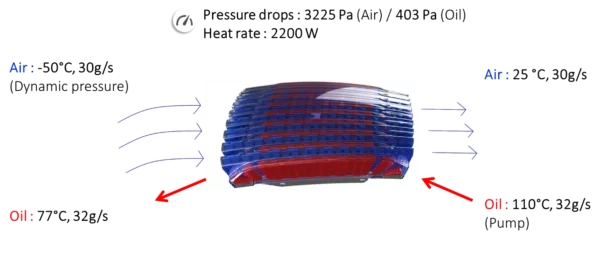
chart addup
  • The testing validated the leakage (or tightness) of the part as well as its performance, both of which were very successful especially when compared with more conventional means of manufacturing.

  • For thermal equipment, AM has a huge advantage. It allows the development of complex channel shapes, improving thermal performance and reducing volume.

  • The AM process also offers the ability to manufacture shapes that are impossible to produce traditionally for this type of equipment (e.g. double-curved channels).

  • In addition, additive manufacturing technology also allows the Manufacture of a part from a single block, in one go. This avoids any other manipulation of the part that could alter it, such as assembly or machining. No welding either, which means no risk of fluid leakage in this new heat exchanger.

  • Lastly, because AM offers the ability to print in one piece, only the functional areas of the metal part are printed (fluid flow surfaces and fastening surfaces), resulting in significant material savings.

Read more about this part on the Temsith website

Temsith Site
August 11, 2023 by

See how to improve the cooling of the inserts on a mold using additive technology while increasing the mold’s performance and decreasing the cycle time.

Short injection times are crucial for profitability in the mold industry, especially in the case of injection molds. Zahoransky AG, a German manufacturer of injection molds, needed a mold insert with eight bores with mold rings. Read the case study about a joint project of Zahoransky and AddUp on how to improve the cooling of the inserts on a mold using additive technology while increasing the mold’s performance and decreasing the cycle time.

INDUSTRY

Tooling

CHALLENGE

To improve the cooling of the inserts on a mold using AM technology while increasing the performance of the mold and decreasing the cycle time.

KEY BENEFITS
  • Ready to use mold after heat treatment
  • Near contour cooling in the insert
  • Reduction of time & cost production
icon addup
Creative Shape
icon addup
Function Integration
icon addup
Lead Time
icon addup
Performance

History

In the mold industry, and especially in the case of injection molds, short injection times are crucial for profitability. They decide how many injection molding machines and molds you need and how high the final price of the part will be. The cooling system in the contour core insert has the most significant influence on these times. Today, the cooling channels are often still produced conventionally by drilling in 2D and cannot always run close to the contour and thus cool evenly and quickly.

Zahoransky AG, headquartered in Todtnau-Geschwend, Baden-Württemberg/Germany, is a manufacturer of injection molds, blister packaging machines, and production equipment. Zahoransky is the world market leader in mold and tool-making for the toothbrush industry. Around 80 percent of the world’s toothbrush molds come from Zahoransky.

Challenges

Zahoransky needed a mold insert with eight bores with mold rings. Up to now, these have had to be well cooled and elaborately sealed using O-rings. The challenge was to improve the cooling of the inserts using additive manufacturing technology in such a way that the cycle times and productivity of the molds would be significantly increased. The complex assembly of the O-rings was to be eliminated, thus reducing manufacturing costs.

The quality of the parts was to be maintained in the usual form. And in addition, the molds needed to be constructed with a steel material qualified for injection molding and had the corrosion and wear resistance for this production.

SOLUTIONS

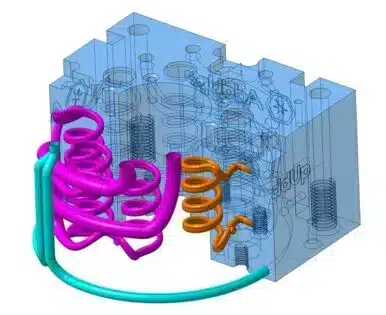
AddUp optimized the cooling channels and designed them as closely as possible to the original contours using AM 3D options, including unique AddUp Manager adaptive strategies skills. All channels needed the same length and cooling capacity to ensure uniform cooling. AddUp utilized simulation software and thermal design optimization to ensure accurate and uniform cooling for this mold.

Next, the new mold was printed on AddUp’s PBF machine (Laser Powder Bed Fusion), the FormUp ® 350 New Generation, using a productive AM build-up strategy with four lasers. This mold was printed in just 30 hours.

Results

AddUp significantly reduced the production time for this mold when compared to traditional manufacturing time. Post-processing for this mold was also significantly reduced thanks to the roller technology offered on the AddUp FormUp 350.

AddUp’s unique combination of fine powder and a roller re-coater provides a superior surface finish, significantly reducing the time needed for post-processing. The mold was printed using a steel material 1.2709/Margin300. This material is a qualified tool steel offering good tool life in the mold.

Zahoransky was pleased with the quality of the mold as well as the production time.

The next step in this project is for another prototype to be manufactured with additional optimizations and in a newly developed tool steel 1.2083/PM420. This new material is a qualified injection molding steel widely used and offers good corrosion and wear resistance.

For more information about additive manufacturing technology for the tooling and molding industry, please do not hesitate to contact us.

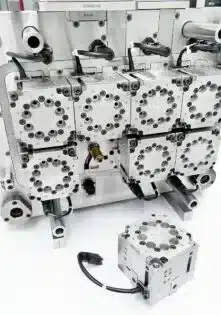
Tooling for the manufacture of pipette tips, with a double quick-change system. Each heating element can be removed individually in no time
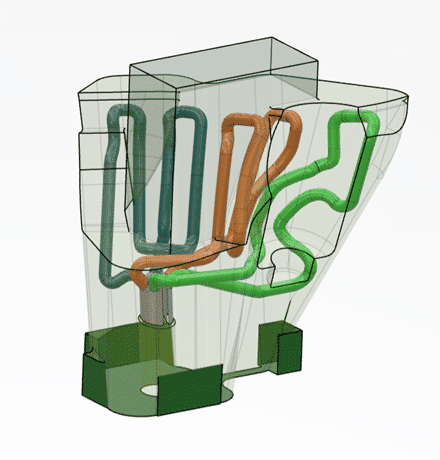
CAD: complex channels inside the part

August 11, 2023 by

Read the case study to understand how to obtain a viable heat exchanger with good thermal and mechanical properties in a reduced time frame.

AddUp and PrintSky join forces to increase the Technology Readiness Level (TRL) of a new-generation heat exchanger. They produced a high-performance part with complex geometries in Aluminum using metal additive manufacturing. Read the case study to understand how to obtain a viable heat exchanger with good thermal and mechanical properties in a reduced time frame.

INDUSTRY

Aeronautics

CHALLENGE

To 3D print a heat exchanger with complex geometries and internal channels

KEY BENEFITS
  • Good corrosion resistance.
  • Mass reduction.
  • Complex geometries
icon addup
Mass Reduction
icon addup
Creative Shape
icon addup
Performance

History

Heat exchangers are commonly used for cooling or heating purposes. A heat exchanger is a system used to transfer calories between two fluids (gas or liquid). Depending on the application, the fluids may be separated to prevent them from mixing or being in direct contact. In the aviation industry, heat exchangers can be used to cool down the engines or warm the fuel.

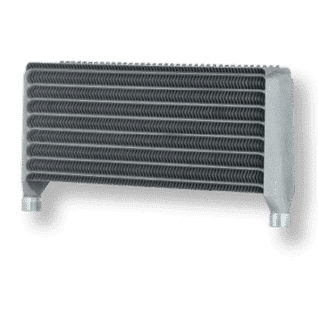
PrintSky is a joint venture between the AddUp group, which specializes in metal additive manufacturing, and Sogéclair, a leader in the integration of high-value-added solutions in aeronautics, space, civil and military transport. PrintSky has associated both expertise of AddUp and Sogéclair to increase the Technology Readiness Level (TRL) of a new generation heat exchanger. With its innovative design by PrintSky, this part allows the heat exchange between glycol water on one side and airflow on the other. The heat exchanger is designed to be installed in an air stream on a rack placed on a helicopter.

Challenges

The design of heat exchangers using traditional processes of stamping, brazing, machining, etc., strongly constrain the design possibilities. Also, expensive tools must be created to produce heat exchangers with those methods.

Not being dependent on these tools by using metal 3D printing reduces costs and time to market. Freeing ourselves from design constraints allows us to look for more efficient concepts better adapted to each case.

SOLUTIONS

The metal additive manufacturing technology allows to create compact and efficient exchangers. Improving the performance, reducing pressure loss during flow, and increasing the exchange surfaces while avoiding the creation of a thick boundary layer are necessary. Combining knowledge in additive manufacturing and thermo-fluidic laws allows the creation of innovative structures capable of reconciling all these constraints to achieve optimum performance.

Printing metal parts on an AddUp FormUp® 350 powder bed fusion (PBF) machine allows for the optimization of production times. For example, a design update to increase or decrease the heat exchange capacity does not require a tooling redesign and setting heavy industry into motion. A printout can follow a simple design update to obtain a viable heat exchanger in a reduced time frame.

The wide range of powders that can be used on the FormUp 350 machines makes it possible to adapt the material to the application. In this case, the temperature, mass, and corrosion constraints led us to use AlSi7Mg aluminum alloy powder. This alloy’s good mechanical and thermal properties and fine grain size allow for smooth surfaces and optimized thicknesses.

Results

The heat exchanger was produced with 0.5mm thin walls and 0.2mm external and 0.35mm internal fins. The FormUp 350’s roller coating system, coupled with the use of a fine-grain powder, allows the printing of parts with a very good surface finish.

There are several advantages to printing an exchanger with Powder Bed Fusion:

  • Independence from suppliers
  • Easier system development
  • Less tooling
  • A single design can cover a wide range of use cases

The challenge is met by producing a newly optimized metal part using the least amount of material possible. Moreover, metal additive manufacturing allows an industrialist to free himself from the constraints imposed by the foundry or forge and to produce high-performance parts with complex geometries.

August 11, 2023 by

AddUp 3D printed a spherical tank that can hold the operating pressure of 60 bar for two-phase fluid loop applications using fluids in a supercritical state at maximum non-operating system temperature.

ADS (Airbus Defence and Space) partners with AddUp to produce a spherical tank that can hold the operating pressure of 60 bar for two-phase fluid loop applications using fluids in a supercritical state at maximum non-operating system temperature. Read the case study about the challenge and solutions of metal 3d printed parts.

INDUSTRY

Aerospace

CHALLENGE

To 3D print a sealed tank that can hold the operating pressure of 60 bar for fluid loop application.

KEY BENEFITS
  • A single component
  • Part printed with no support inside
  • Reduce the mass of the part
icon addup
Mass Reduction
icon addup
Performance

History: AddUp and ADS

ADS (Airbus Defence and Space) is an Airbus Group division that is one of the world’s top 10 defense and space industry players. It is specialized in military aircraft, drones, missiles, space launchers, and artificial satellites. ADS wishes to evaluate the feasibility of additive manufacturing parts such as hollow stainless-steel spheres. The objective is to produce a sealed tank that can hold the operating pressure of 60 bar for two-phase fluid loop applications using fluids in a supercritical state at maximum non-operating system temperature.

This tank can be used in a two-phase heat exchanger. At ambient temperature, the working fluid contained in the system is above its critical temperature, meaning it is entirely gaseous. The purpose of this tank is to increase the volume of the fluid loop system to limit the internal pressure for a given temperature.

Challenges of printing a sealed tank

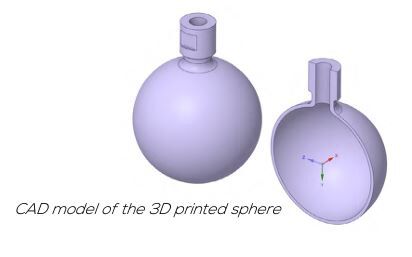
The existing technique to make the tank is using a cylinder and machined hemispherical shells welded together. This design makes the final part too massive, and the welded areas are overstressed during the time of pressurization. ADS asked AddUp to address these issues and produce a tank using metal 3D printing to free itself from the constraints of conventional processes. With this new design freedom, the tank can be spherical, an ideal geometry to withstand pressure. The biggest technical challenge in this project was to print a sphere without support inside.

The manufacturing specifications:

  • 316L stainless steel material
  • Withstand a 60-bar pressure
  • A single component without assembly
  • No internal supports
  • As light as possible while handling the pressure requirements
  • Spherical design

Solution for a 3D printed spherical tank

To manufacture the sphere, the FormUp® 350 was chosen because it can be equipped with a roller recoating system and fine powder. This machine in this configuration allows for large overhang surfaces to be built without supports.

The 316L stainless steel was chosen for this application for its corrosion resistance, which allows durability.

Results and benefits of additive manufacturing

AddUp , a metal 3D parts manufacturer, successfully printed the new geometry provided by ADS and did not need to modify it thanks to the capabilities of the FormUp® 350. The final dimensions are 78 mm internal diameter with a thickness of 2.2 mm.

More information about Airbus Defence and Space here.

chart addup
  • The combined use of the roller and the fine powder allowed the production of thin walls with a perfect surface finish. The surface inside the part is clean and does not need any post-processing.

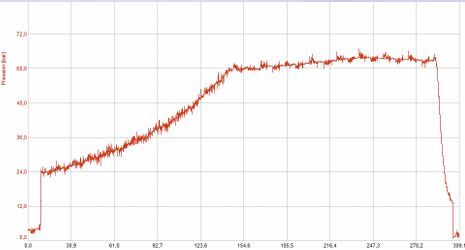
  • The 3D-printed parts held the 60 bar water pressure for two minutes, enough to check the pressure containment.

  • The exterior of the new metal part has been machined to ensure a constant thickness over the entire sphere and to eliminate the surface defects inherent to the process.

“Airbus Defence and Space SAS has a large experience in developing innovative Additive Manufactured products with AddUp. This new demonstrator shows the technical expertise of AddUp to manufacture innovative designs to allow Airbus DS to propose breakthrough and high-value applications. This design would not have been possible without fine power/roller technology developed by AddUp. It opens a new door to more innovative designs”

- Delphine Carponcin, Additive Manufacturing Project Manager, Airbus Defence and Space

October 17, 2019 by

Improving Injection Mold Hotspots For Optimal Cooling Capabilities With Additive Manufacturing

INDUSTRY

Tooling & Molding

CHALLENGE

Improving injection mold hotspots for optimal cooling capabilities with additive manufacturing.

icon addup
INCREASED PRODUCTIVITY
icon addup
REDUCED MANUFACTURING TIME
icon addup
CONFORMAL COOLING

History

As a leading German pattern and mold maker, Siebenwurst offers their customers more than just a good mold. They combine tradition with high-tech and offer intelligent and innovative complete solutions.

For more than a century, Siebenwurst has stood for the highest quality in model and mold making and supplies perfect tools from the design model to series production. Modern methods and manufacturing technologies guarantee the fastest possible tool production. The first AM tooling applications have been developed and evaluated with AddUp in the last two years.

Challenge

The conventional design of cooling systems reaches its limits with critical molded parts due to the complexity of the geometry. Therefore, it is difficult with conventional internal cooling to cool all contour sections sufficiently and uniformly. This can lead to an inhomogeneous temperature distribution in the application and hot spots can develop in the part.

Hot spots are a critical factor in determining both cycle time and quality in production, and must be avoided for good results. If molds are insufficiently tempered and the same quality is desired, the cycle time increases and the mold inevitably becomes less productive.

Solution

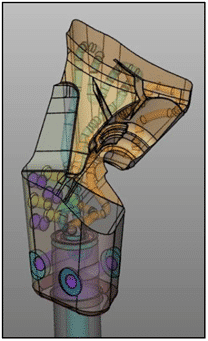
Powder Bed Fusion allows for new design freedoms that conventional machining could never touch. Molds can be built with parallel cooling circuits that follow the contours of the mold surface, no matter the shape of the final part. This new style of cooling circuits is known as Conformal Cooling.

Conformal cooling design makes it possible to reduce the cross-sections of the channels. This is possible because several channels can run in parallel from the inlet to the outlet , thus mapping the mold surface homogeneously. The channels can easily be designed to fit perfectly into the complex zones of the mold. The durability and manufacturability of the molds should be comparable to the conventional method, if not better.

While the additive production of the tool itself will sometimes be more expensive than if manufactured via other methods, that additional cost will be recouped in final part production due to the increased tool productivity and longevity.

Process

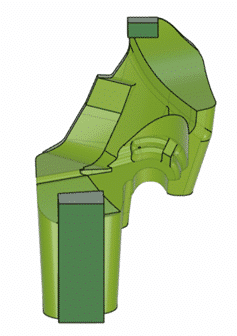
In order to extract the maximum benefits 3D Printing can provide, the Slide Valve had to be redesigned, and the CAD file must be modified. The new design incorporates a system of balanced cooling circuits with individual channels laid out in parallel. This approach allows coolant to flow closer to any features that need to be cooled, no matter their shape. Cooling rates will be faster, but also more homogenous throughout the entire part because the channels are a consistent distance from those features. In other words, no more hot spots.

The Additive Manufacturing workflow also requires some adjustments to the CAD model. Any references and clamping surfaces to be used in downstream machining processes need to be incorporated into the model. Those features may need to be adjusted when the part design changes.  

Production

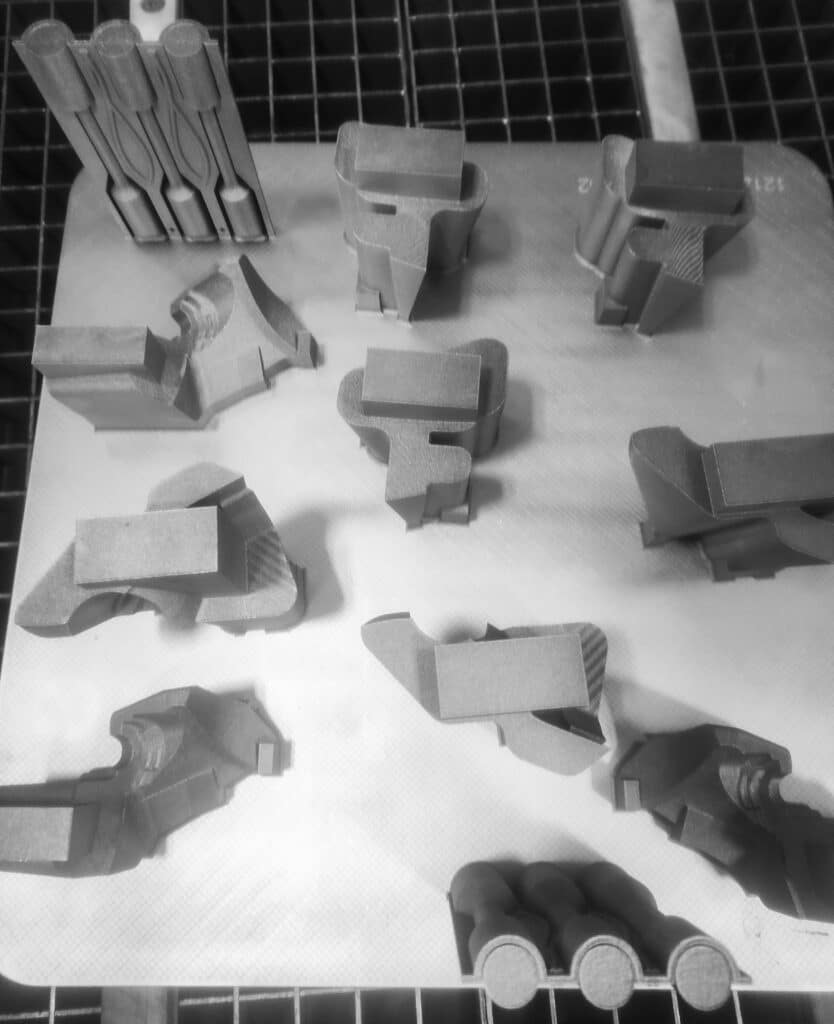
The slide head inserts are printed with the following machine configuration:

  • FormUp 350 with 4 lasers
  • Tool steel 1.2709/Maragins 18Ni300 (46-50HRC)
  • Fine Powder (5-25µm)
  • Roller Recoating technology

Different slider shapes are needed for one tool, all 8 of which fit on one FormUp build platform (350x350mm) with room to spare for testing specimens. Thus, thanks to the large  build plate and 4 lasers, all inserts can be printed in one production job. Completing all necessary parts on one build creates huge savings in both time and costs associated with starting up the printer.

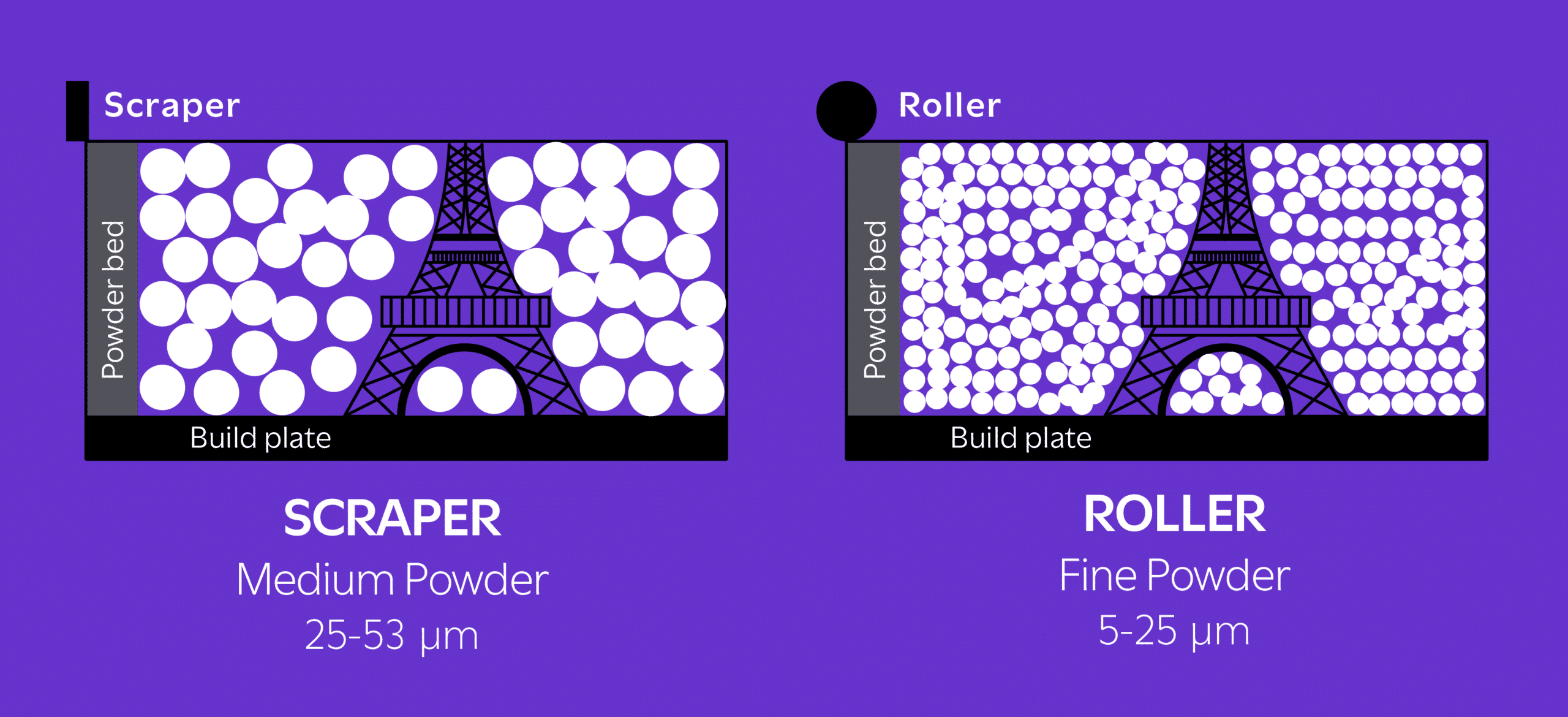
The roller recoating technology enables the use of  fine powder, which will clump when paired with a more commonly seen blade or scraper recoater. The use of a roller is unique to AddUp.

Roller recoating brings the advantage of achieving the best surface and contour qualities through higher compaction and uniform distribution of the individual powder layers. For this application, Siebenwurst was able to cut back significantly on their surface finishing processes, leading to 42% cost savings in that area.

For this part, the contour quality is another emphasis, with the goal of keeping the post-processing to a minimum with as little geometric deviation as possible.

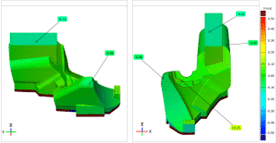
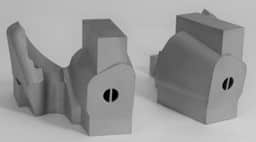
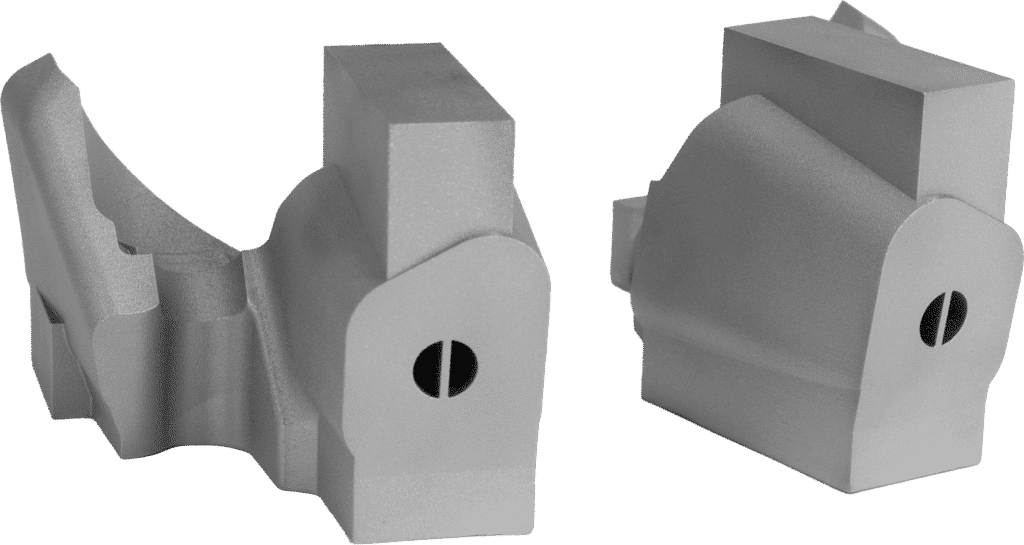
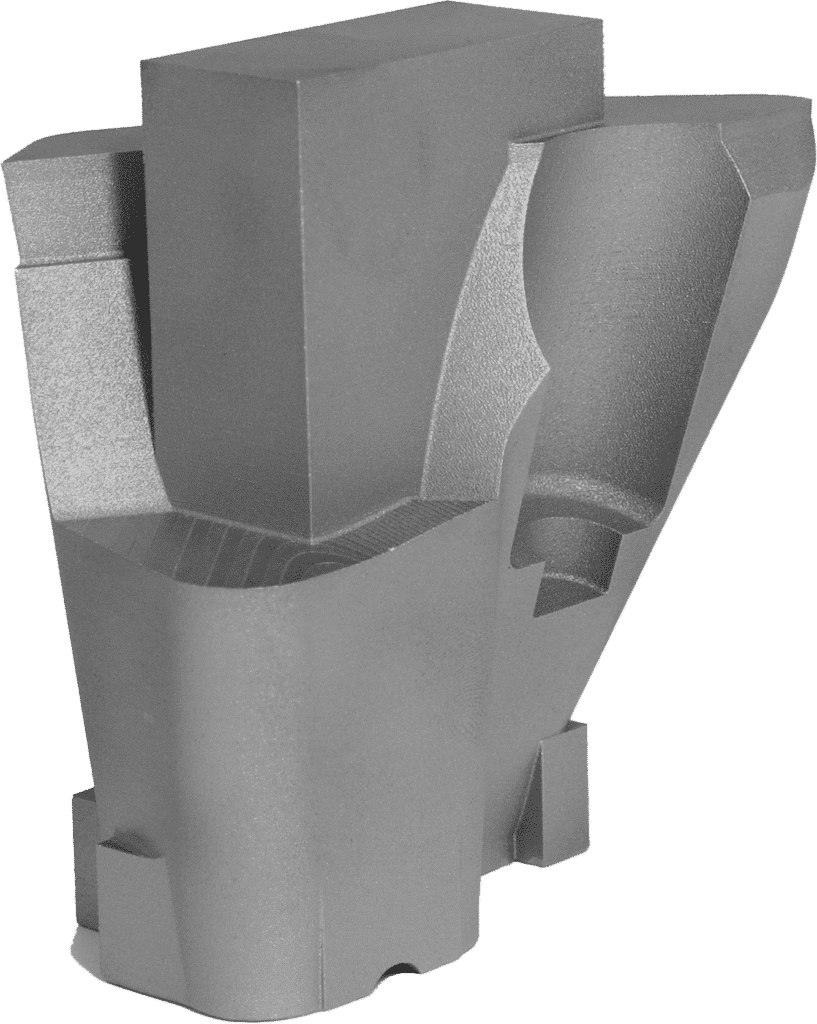
The bounding box of the part is 100x65x50 mm3 and the maximum deviation from the contour definition is 0.12mm. Siebenwurst carried out the complete reworking of the gate valves and the sampling of the plastic parts. The previous dimensioning and finish machining worked perfectly and the sampling could be carried out in the original tool without any problems.

The following pictures show the generated surface and precision of the printed contour.


Results

Early trials show the maximum temperature recorded at the insert dropping by 16°C, a clear mark of improvement and a sign that the hot spot was eliminated in the new design. The printed part held to the expected geometric tolerance and allowed for a significant reduction in surface finishing expenses. As the study continues, cycle time and tool longevity will be studied as well.

The success of this project inspired further cooperation between AddUp and Siebenwurst in the near future, and has opened the doors for Siebenwurst to pursue more AM applications.

Siebenwurst Door Handle
Siebenwurst Door Handle 2
  • Reduction of the slide valve temperature from 62°C to 46°C

  • Elimination of temperature hotspot in slide gate area

  • Surface finishing cost reduction of 42%

  • « Go to Previous Page
  • Page 1
  • Interim pages omitted …
  • Page 3
  • Page 4
  • Page 5
AddUp Headquarters

13-33 Rue Verte
ZI de Ladoux, 63118 Cébazat
France

AddUp Solution Center

5101 Creek Rd,
Cincinnati, OH 45242
USA

Footer

  • Machines
    • PBF
      • FormUp 350
      • FormUp 350 Evolution
    • DED
      • Modulo 400
      • Magic 800
    • Software
      • AddUp Dashboards
    • Why AddUp
      • Customer Journey
      • Certifications
  • Service
    • Training
    • AddUp Academy
  • Industries
    • Medical
    • Aerospace & Defense
    • Tooling & Molding
    • Other Industries
  • Applications
  • Resources
    • Guide to Metal 3D Printing
    • Blog
    • Videos
    • Events
    • Materials
    • Downloads
    • AddUp Academy
    • Customer Portal
  • Company
    • News & Press
    • Partners
    • Careers
    • Supplier Portal
  • Contact

© 2026 AddUp. All Rights Reserved. Privacy Policy| Terms of Use| Legal Notice

Ask an addup expert